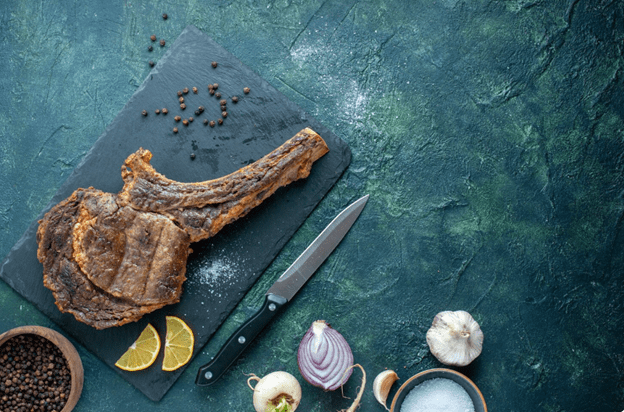
There’s a moment people have when they see the price of a porterhouse. A pause. Maybe a raised eyebrow. It’s fair. This is not the steak you grab on a random Tuesday. But price alone never tells the full story, especially with a cut that carries two of the most prized muscles on the animal. Before you decide whether to buy porterhouse steak, it helps to understand what’s actually on that board in front of you.
Two Steaks, One Cut
A porterhouse comes from the rear end of the short loin. That specific spot matters. On one side of the bone sits the tenderloin, famously soft, almost delicate. On the other side is the strip loin, firmer, with a deeper, beef-forward flavor. When you buy porterhouse steak, you are getting both experiences in a single cut.
That balance is not an accident of marketing. It is anatomy. The T-shaped bone divides two muscles that do very different jobs on the animal, which is exactly why they taste and feel different on the plate. We cut our porterhouses thick at La Carniceria Prime Meat Market because anything thinner cheats you out of that contrast.
Size Changes the Math
Porterhouse steaks are big. Not “looks large in the package” big. Truly substantial. Most fall somewhere between 24 and 40 ounces, depending on thickness. That means one steak can feed two people comfortably, sometimes more if there are sides involved.
So when customers buy porterhouse steak, they are often replacing two separate premium steaks with one shared centerpiece. The value shifts when you think of it that way. You are not just paying for weight. You are paying for variety, presentation, and the kind of meal people remember a week later.
The Bone Is Doing More Than You Think
Some cuts are sold bone-in for appearance. With a porterhouse, the bone plays a real role in how the steak cooks. It slows heat transfer slightly and helps protect the tenderloin side, which cooks faster than the strip. The result, when handled properly, is a more even finish across two very different muscles.
That is one of the reasons experienced home cooks choose to buy porterhouse steak for grilling or reverse searing. A good hard sear, then gentle heat to finish. Nothing fancy, just attention. The bone, the fat, the thickness. They do their part if you do yours.
Craft, Not Just Cut
Not every T-bone qualifies as a porterhouse. The tenderloin portion has to be large enough to meet the standard. That depends on where the butcher makes the cut along the short loin. Go a little too far forward, and you lose that generous filet section.
When people buy porterhouse steak from us, they are paying for more than beef. They are paying for careful sourcing, proper aging, and precise cutting. Marbling matters. Thickness matters. Balance across the bone matters. Those details are where value hides, and where shortcuts usually show up.
Why It Feels Like a Steakhouse at Home?
There’s a reason steakhouses feature porterhouse as a signature item. It lands on the table with presence. It invites sharing. You slice the strip side for one person, the filet for another. Conversation slows down a bit. People pay attention.
If you have spotted porterhouse steak for sale and hesitated, consider what you are actually bringing home. This is not just dinner. It is two premium cuts, bone-in flavor, skilled butchery, and a meal that feels like an occasion. That is exactly what we focus on at La Carniceria Prime Meat Market. When you are ready for a steak that earns its place at the center of the table, trust Prime La Carniceria Meat Market and decide to buy a porterhouse steak.
FAQs
-
How many people can one porterhouse steak feed?
Usually two adults, sometimes three, with generous side dishes.
-
Is porterhouse better than ribeye?
Different experience. Porterhouse gives you filet tenderness and strip flavor in one cut.
-
What thickness is ideal for a porterhouse?
Around 1.5 to 2 inches. Thick steaks cook more evenly and stay juicier.
-
Why does porterhouse cost more than other steaks?
You are paying for two premium muscles, size, bone-in cooking benefits, and precise butchery.
-
Can I cook a porterhouse indoors?
Yes. A heavy pan for searing and an oven finish works very well for thick cuts.